 EN
EN

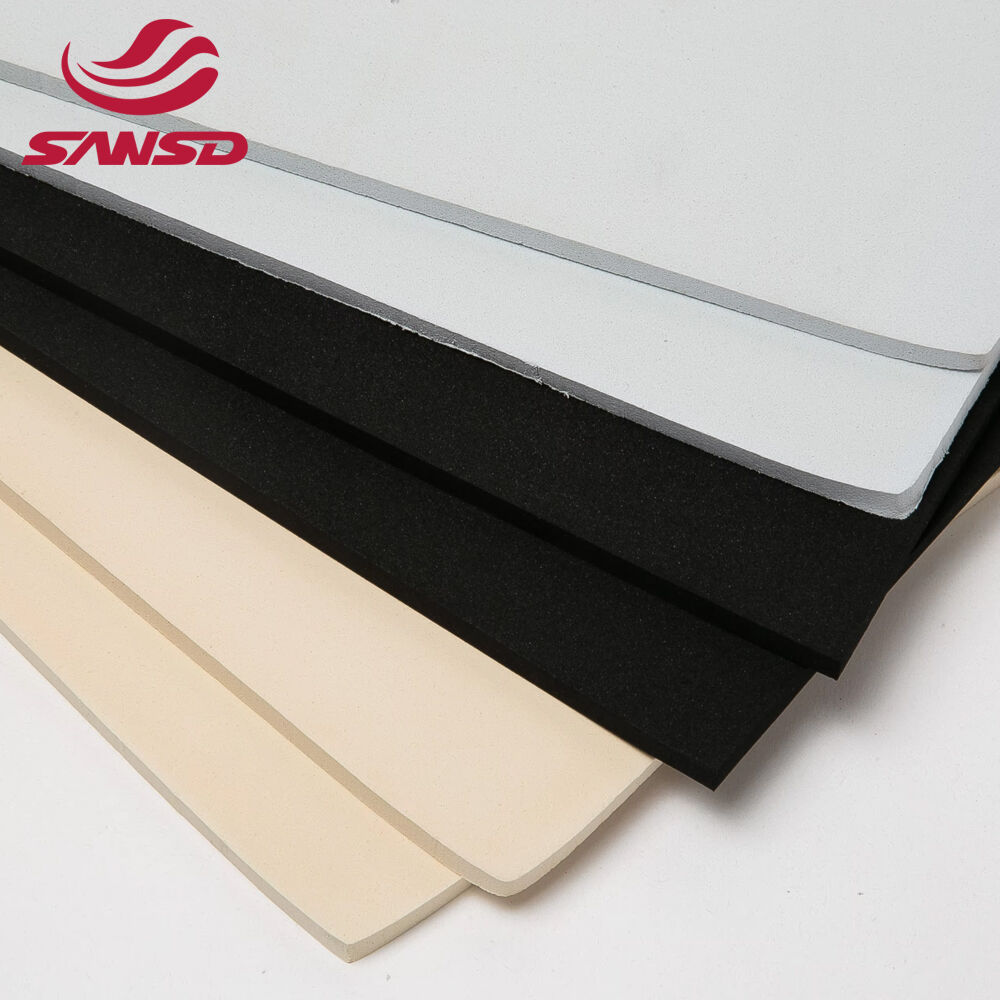
Market Positioning of Top Polyethylene Foam Sheet Manufacturers
Global Market Share and Revenue Ranking: BASF, Sekisui, Dow, Zotefoams, Trocellen, Armacell, and Arkema
The polyethylene foam sheet market is shaped by a blend of global chemical leaders and specialized foam innovators. BASF and Dow hold top revenue positions—not solely due to foam expertise, but through integration within broader polymer and materials portfolios. Sekisui Chemical commands strong volume-based leadership in Asia-Pacific, leveraging cost-efficient extrusion at scale. Zotefoams and Trocellen distinguish themselves via proprietary cross-linked (XLPE) technology, serving high-performance sectors like aerospace and premium automotive sealing. Armacell focuses on engineered insulation solutions backed by global logistics and application engineering support. Arkema applies advanced material science to niche, high-value applications such as medical device packaging and battery thermal management. Collectively, these seven manufacturers represent the core of the global polyethylene foam sheet leadership—though mid-tier players like FoamPartner and Pregis remain competitive through rapid customization, localized service, and agile sheet-dimension offerings.
Regional Manufacturing Footprint: Asia-Pacific Scale vs. European Precision vs. North American Customization
Manufacturing strategy reflects regional industrial priorities. In Asia-Pacific—particularly China and South Korea—producers emphasize high-volume, low-cost extrusion to serve electronics packaging and mass-market consumer goods. European manufacturers, including Zotefoams and Trocellen, invest heavily in precision process control to meet tight thickness tolerances (±3%) and uniform cell structure—critical for automotive sealing systems and HVAC insulation compliance. North American producers prioritize responsiveness: offering on-demand cutting, density selection across 25–200 kg/m³, and integrated adhesive lamination to support construction, medical device, and defense supply chains. Buyers evaluating suppliers must therefore weigh not just global rank, but how well a manufacturer’s regional capabilities align with technical specs, lead time expectations, and logistical resilience.
Product Differentiation Strategies Among Polyethylene Foam Sheet Manufacturers
XLPE vs. Non-XLPE: Performance Trade-offs in Thermal Insulation, Compression Recovery, and Buoyancy
Polyethylene foam sheet manufacturers segment their portfolios between cross-linked (XLPE) and non-cross-linked (non-XLPE) foams—each optimized for distinct performance requirements. XLPE achieves its advantages through chemical or physical cross-linking, which locks polymer chains into a stable, closed-cell architecture. This yields superior thermal resistance, consistent buoyancy under repeated compression, and near-complete recovery after deformation. Non-XLPE foams—produced without cross-linking—are more economical and easier to thermoform, but exhibit lower resilience, higher moisture absorption over time, and reduced dimensional stability under sustained load.
| Property | XLPE Foam | Non-XLPE Foam |
|---|---|---|
| Thermal insulation | Excellent – low thermal conductivity (0.034 W/m·K) | Good – slightly higher conductivity (~0.040 W/m·K) |
| Compression recovery | High – returns to 95%+ of original thickness | Moderate – permanent deformation after heavy loads |
| Buoyancy | Superior – uniform cell structure, stable up to 200°C | Adequate – some cell collapse reduces long-term performance |
| Typical cost index | Higher (1.5–3× non-XLPE) | Lower – less processing required |
XLPE is specified where reliability is non-negotiable: marine flotation aids, HVAC duct insulation, and reusable protective packaging. Non-XLPE remains the pragmatic choice for disposable packaging, light-duty cushioning, and applications where cost efficiency outweighs long-term performance demands.
Density-Specific Applications: 25–200 kg/m³ Offerings for Automotive Seating, Pharma Packaging, and Construction
Density is a primary lever for functional tailoring—and leading manufacturers calibrate it precisely to match end-use physics. Foams at 25–50 kg/m³ deliver soft, energy-absorbing cushioning ideal for sterile pharma packaging and delicate medical instruments. Medium-density grades (50–100 kg/m³) strike a balance between shock absorption and structural integrity—commonly used in automotive seating inserts, floor mats, and tool storage liners. High-density foams (100–200 kg/m³) provide rigidity and compressive strength for construction vapor barriers, gasketing in industrial equipment, and structural cores in marine and transportation applications. These density bands are achieved through controlled resin formulation, blowing agent selection, and extrusion parameters—all aligned to meet ASTM D1622 and ISO 844 standards for compression set, tensile strength, and dimensional stability. By anchoring density to application physics, manufacturers avoid over-engineering while ensuring reliable, repeatable performance.
Production Capabilities and Material Sourcing Excellence
Extrusion Process Control: Achieving ±3% Thickness Tolerance and Batch-to-Batch Consistency
Achieving ±3% thickness tolerance isn’t incidental—it’s engineered. For applications like automotive gasketing or medical packaging inserts, even minor deviations compromise sealing integrity or part fit. Leading manufacturers deploy real-time extrusion monitoring: infrared thickness gauges, laser profilometers, and closed-loop feedback systems that dynamically adjust melt temperature, screw speed, and cooling rates. Deviations exceeding 0.5 mm trigger automatic corrections—minimizing scrap and rework. Batch-to-batch consistency is further ensured through digital process logs, tracking every variable—from barrel zone temperatures to die lip clearance—for each resin grade and density target. This discipline reduces material waste by up to 17% and supports compliance with IATF 16949 and ISO 13485—key requirements for automotive and medical customers.
Resin Strategy: LDPE, LLDPE, and HDPE Selection Impacts on Flexibility, Strength, and Recyclability
Resin selection defines foundational behavior. LDPE delivers the flexibility and fine-celled structure essential for protective packaging and cushioning recovery. LLDPE adds toughness and puncture resistance—valuable in industrial padding and transport liners. HDPE contributes stiffness and barrier performance, making it ideal for construction-grade vapor barriers and rigid gaskets. Increasingly, forward-looking manufacturers integrate 30–50% post-industrial recycled content into LDPE and LLDPE blends—without sacrificing ASTM D1622-certified density or compression set performance. HDPE-based foams, being mono-material, achieve near-full recyclability in established take-back programs. Advanced blending techniques also allow precise tuning of melt flow index and crystallinity—optimizing both extrusion efficiency and final product performance across the full 25–200 kg/m³ density spectrum.
Demand-Driven Innovation Priorities for Polyethylene Foam Sheet Manufacturers in 2026
Sustainability, electrification, and digital agility now define innovation leadership. Over 65% of major polyethylene foam sheet manufacturers have prioritized closed-loop recycling infrastructure and bio-based feedstock development to meet EU Taxonomy alignment deadlines by 2026. Cross-sector R&D partnerships—especially with construction and EV battery OEMs—are accelerating flame-retardant formulations that retain full recyclability, addressing a critical gap in building code compliance. E-commerce growth continues to drive investment in automated thickness calibration, cutting material waste by 12–18% while enabling thinner, lighter, yet equally protective sheets. Meanwhile, automotive electrification demands new dielectric foam grades capable of insulating 800V battery systems while damping high-frequency vibration—a challenge met through novel cell structure engineering and ceramic-filled polymer composites. Most strategically, AI-integrated extrusion lines now enable dynamic density modulation within a single production run—supporting simultaneous orders for 60 kg/m³ medical packaging and 200 kg/m³ marine buoyancy components. As regulatory frameworks tighten and circular economy mandates shift from aspiration to operation, this convergence of sustainability rigor, application-specific engineering, and production intelligence will define market leadership.
FAQs
What are the main applications of XLPE foam sheets? XLPE foam sheets are widely used in applications requiring high thermal resistance, excellent compression recovery, and adequate buoyancy. Common uses include HVAC duct insulation, marine flotation aids, and reusable protective packaging.
How does density affect the performance of polyethylene foam sheets? Density significantly impacts application suitability. Low-density foams (25–50 kg/m³) are ideal for cushioning and sterile packaging, medium-density foams (50–100 kg/m³) are used for automotive and floor mats, while high-density foams (100–200 kg/m³) are designed for structural applications like vapor barriers and industrial gaskets.
What innovations are expected in polyethylene foam sheet production by 2026? Manufacturers are focusing on sustainability, recycling, and digital agility. Innovations include AI-integrated extrusion lines for precise density modulation, flame-retardant but recyclable formulations, and advanced dielectric foam grades for EV batteries.
What is the difference between XLPE and non-XLPE foams? XLPE foams, with cross-linked polymer chains, offer higher thermal resistance, better compression recovery, and stability under tough conditions. Non-XLPE foams are more economical, easier to thermoform, but less resilient and durable.
How do regional manufacturing priorities affect polyethylene foam production? Asia-Pacific focuses on high-volume, cost-efficient production, Europe prioritizes precision for critical applications, and North America emphasizes customization with fast lead times and tailored solutions for diverse industries.