 EN
EN

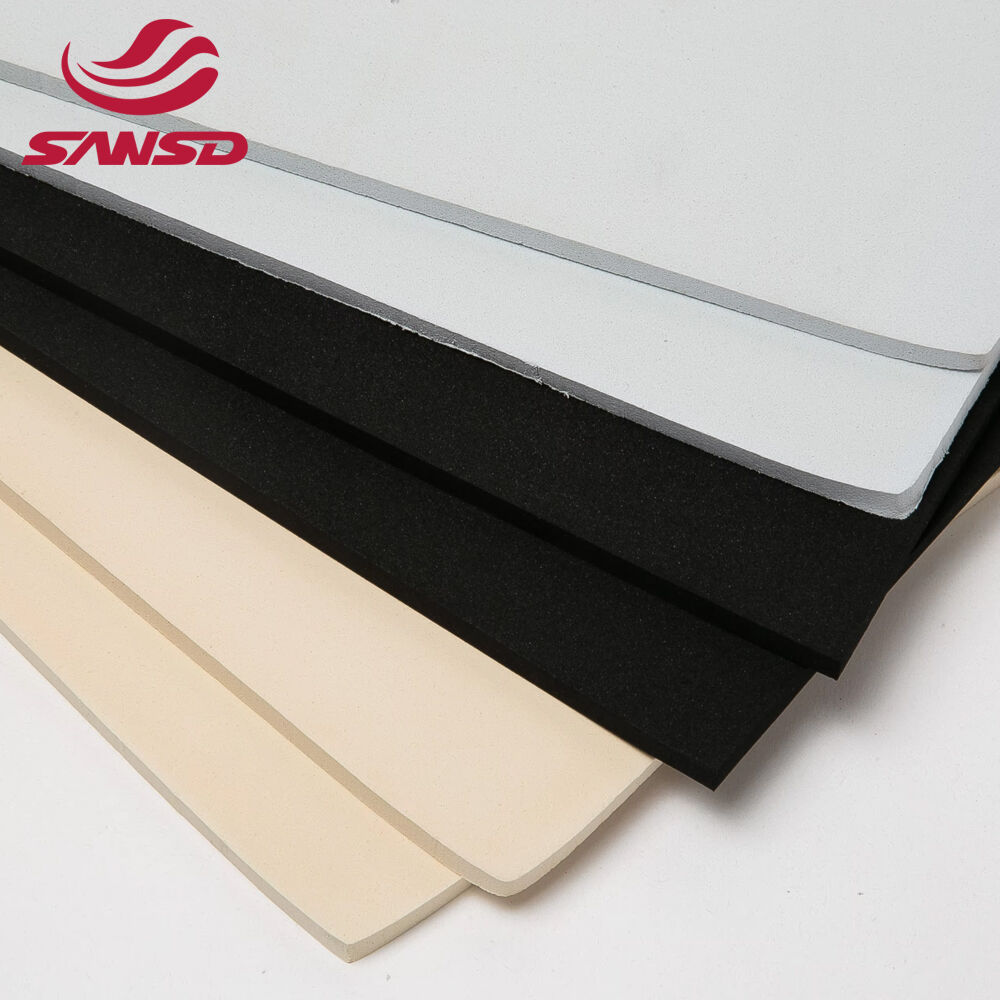
Core Performance Benefits of Custom Rubber Foam
Superior Compression Set Resistance for Long-Term Sealing Integrity
Custom rubber foam delivers exceptional compression set resistance—recovering over 95% of its original thickness after repeated compression cycles. This stability is essential for maintaining sealing integrity in demanding applications such as hydraulic system gaskets, medical device enclosures, and industrial machinery. Unlike standard elastomers that permanently deform under sustained load, engineered custom rubber foam prevents leaks, contamination, and unplanned downtime. In high-pressure environments, manufacturers report up to 40% longer service life compared to conventional alternatives.
Advanced Vibration Dampening and Integrated Thermal/EMI Shielding
Closed-cell custom rubber foam provides 30% greater vibration absorption than generic foams while inherently attenuating electromagnetic interference (EMI). Its tunable density enables precise control over damping profiles—making it ideal for aerospace avionics, robotic controllers, and other systems sensitive to harmonic resonance above 200 Hz. Independent testing shows integrated foam solutions reduce component failure rates by 22% in such environments. By combining mechanical isolation and EMI shielding in a single material layer, custom foam eliminates the need for separate shielding components—streamlining assembly and saving space in compact, high-reliability designs.
Environmental Resilience: UV, Oil, Chemical, and Extreme-Temperature Stability
Custom rubber foam operates reliably across an extended temperature range (–65°F to 300°F) and resists degradation from UV exposure, petroleum-based oils, and aggressive industrial chemicals. Cross-linked formulations swell 75% less than standard rubbers when exposed to ASTM #3 oil at 212°F for 72 hours—a benchmark test for chemical resistance. This durability directly lowers maintenance costs: chemical processing facilities using custom foam seals report 35% fewer annual replacements. Its stability also ensures consistent performance in outdoor applications—from solar panel edge seals to marine instrumentation housings—where environmental exposure is unavoidable.
Strategic Customization Capabilities Driving B2B Value
For B2B applications, custom rubber foam empowers manufacturers to solve specific engineering challenges—not just meet generic specifications. Industry research confirms that 80% of industrial buyers prioritize performance-tailored materials over off-the-shelf alternatives, reflecting growing demand for precision-engineered solutions.
Precision Tailoring of Density, Thickness, Cell Structure, and Compound Formulation
Manufacturers can fine-tune foam properties to match functional requirements:
- Density: Adjustable from 2–40 lb/ft³ to support light-duty cushioning or heavy-load bearing
- Cell structure: Open-cell variants optimize airflow and acoustic absorption; closed-cell versions deliver superior sealing, moisture resistance, and structural integrity
- Thickness: Ranges from 0.5 mm to 50 mm to accommodate tight spatial constraints or layered assemblies
- Compound formulation: Polymer blends enhance resistance to oils, solvents, ozone, or sterilization methods—critical for automotive, medical, and food-processing applications
Regulatory Compliance Support: ISO 9001, ISO 13485, FDA, and UL Certification Pathways
Customization streamlines regulatory validation by aligning material properties with industry-specific standards from the outset:
- ISO 9001-compliant quality management systems ensure consistent manufacturing controls
- FDA 21 CFR Part 177 certification supports indirect food-contact applications
- UL 94 flame ratings (e.g., V-0, HB) meet electrical safety requirements for enclosures and wiring harnesses
- ISO 13485 documentation provides full traceability for Class I–III medical devices
This targeted approach reduces compliance validation timelines by approximately 30%, accelerating time-to-market without compromising audit readiness.
Total Cost of Ownership: Quantifying ROI on Custom Rubber Foam
While custom rubber foam carries a higher initial cost than commodity alternatives, its true value emerges over the product lifecycle. Total cost of ownership (TCO) accounts for installation labor, maintenance frequency, unplanned downtime, spare-part inventory, and replacement intervals. A part costing 20% more upfront—but lasting three times longer—delivers measurable ROI. For B2B decision-makers, evaluating TCO—not sticker price—is essential to identifying where custom foam delivers the strongest financial return.
Durability-Driven Maintenance Reduction in Automotive and Medical Devices
Automotive gaskets and medical-device seals undergo thousands of thermal, mechanical, and pressure cycles over their lifespan. Standard foams often degrade after just a few hundred cycles, triggering premature replacement and service interruptions. Custom rubber foam—optimized for compression set resistance and environmental resilience—maintains functional integrity far longer. In critical medical ventilators, for example, reduced foam failure rates translate into lower field-service costs for hospitals and higher equipment uptime for patients. The result is a demonstrably lower TCO—even with elevated initial material investment.
Lifecycle Cost Comparison: Open-Cell vs. Closed-Cell Custom Rubber Foam in HVAC and Protective Packaging
The choice between open-cell and closed-cell custom rubber foam significantly influences long-term economics in HVAC insulation and protective packaging. Real-world performance differences drive divergent TCO outcomes:
| Factor | Open-Cell Custom Rubber Foam | Closed-Cell Custom Rubber Foam |
|---|---|---|
| Initial material cost | Lower | Higher |
| Moisture absorption risk | Higher (requires vapor barrier) | Very low (inherent barrier) |
| Thermal insulation effectiveness | Good | Excellent |
| Mechanical durability | Moderate | High |
| Replacement frequency in HVAC | Every 3–5 years | Every 8–10 years |
| 10‑year TCO (including maintenance & replacement) | Higher due to early failure | Lower overall despite higher upfront |
In high-humidity or impact-prone settings—such as HVAC duct liners or reusable shipping containers—closed-cell custom rubber foam typically delivers a 30–50% lower TCO over ten years. In contrast, open-cell remains cost-effective for low-stress, climate-controlled applications. Selecting the optimal cell structure based on actual operating conditions—not assumptions—ensures the best balance of performance, reliability, and long-term value.
FAQs
What is custom rubber foam used for?
Custom rubber foam is used in various industries for applications such as sealing, vibration dampening, thermal insulation, EMI shielding, and environmental resistance. It is ideal for automotive, aerospace, medical devices, and industrial machinery.
How does custom rubber foam compare to standard elastomers?
Custom rubber foam offers superior compression set resistance, environmental durability, and tailored performance, making it more reliable and cost-effective over its lifecycle compared to standard elastomers.
What's the difference between open-cell and closed-cell rubber foam?
Open-cell foam is better for airflow and acoustic absorption, while closed-cell foam excels in sealing, moisture resistance, and long-term durability. The choice depends on the specific application and environmental conditions.
Is custom rubber foam suitable for outdoor use?
Yes, custom rubber foam is highly resistant to UV exposure, temperature extremes, and harsh chemicals, making it suitable for outdoor applications like solar panels and marine equipment.
What factors influence the total cost of ownership (TCO) of custom rubber foam?
TCO considers initial material costs, durability, maintenance frequency, replacement intervals, and savings from preventing unplanned downtime. Custom rubber foam's longevity often results in a lower TCO compared to alternatives.