 EN
EN
Shock Absorption: Balancing Impact Protection and Structural Stability
Density, Thickness, and Force Dissipation in High-Impact Taekwondo Movements
For tatami mats in taekwondo, achieving the right balance between impact protection and structural stability is critical. Density and thickness directly govern how effectively the mat dissipates kinetic energy from high-velocity kicks, jumps, and falls. A denser core ensures footwork stability and responsive pivots, while sufficient foam thickness enables controlled compression to absorb shock—reducing joint-loading forces without compromising surface rebound. Effective force dissipation relies on elastic deformation and full shape recovery; bottoming out undermines both safety and performance. Standards such as EN 14904 define acceptable vertical deformation and force reduction thresholds, ensuring surfaces cushion impacts while retaining dynamic responsiveness. For taekwondo, mats delivering 25–40% force reduction align with this dual requirement—offering meaningful joint protection without sacrificing the reactive feedback essential for powerful technique execution.
The Injury Prevention Evidence: Taekwondo-Specific Data from Dojangs and WT Events
Real-world evidence confirms that optimized shock absorption lowers injury incidence in taekwondo. Dojang-based studies show athletes training on high-density, properly thickened tatami experience significantly fewer lower-extremity strains and contusions than those on thinner or low-resilience alternatives. WT competition data further demonstrates that adequate mat thickness reduces the severity of head and spinal impacts during falls and throws. A key safety metric is G‑max—the peak deceleration measured upon impact—where values below 200 indicate acceptable energy attenuation for high-impact landings. By integrating shock-absorbing layers compliant with recognized sports flooring standards like EN 14904, facilities reduce acute injury risk while preserving the structural integrity needed for elite-level performance.
Traction and Surface Integrity for Dynamic Technique Execution
Non-Slip Performance Under Real-World Conditions: Sweat, Speed, and Rotation
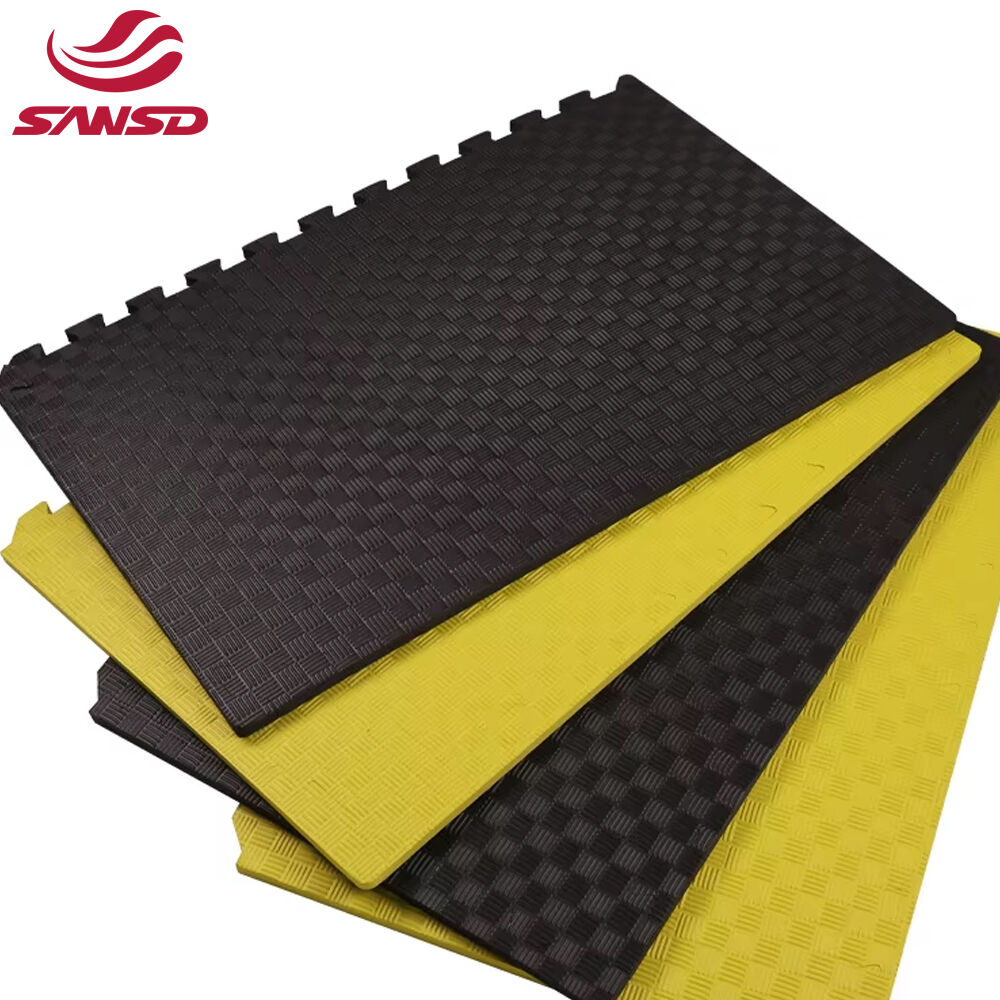
Surface integrity is foundational to safe, precise taekwondo execution. During rapid directional changes, spins, and high-speed kicks, consistent traction supports balance, control, and neuromuscular confidence. Sweat accumulation—common in intense training or competition—can drastically reduce grip, increasing slip-and-fall risk. Premium tatami mats use engineered textures (e.g., basketweave or micro-pebbled finishes) that actively channel moisture away from contact points, sustaining friction under real-world duress. This design mitigates lateral slide during rotational techniques like dollyo chagi and mondollyo chagi, supporting clean pivot mechanics and reducing non-contact lower-limb injuries by up to 32%, according to field research. Critically, certified competition-grade mats maintain this non-slip performance across thousands of impacts—ensuring reliability throughout tournaments and daily practice.
Compliance and Certification: Why WT-Approved Tatami Mats Are Non-Negotiable
World Taekwondo (WT) mandates official approval for all competition surfaces, making WT-certified tatami a strict requirement for sanctioned events. Uncertified alternatives frequently fall short on impact attenuation, slip resistance, and dimensional stability—introducing preventable injury risks and operational liabilities. WT-approved mats undergo rigorous third-party testing against benchmarks including EN 14904, verifying consistent force dissipation, reliable traction, and long-term surface integrity under competitive loads. Facilities using non-compliant flooring face immediate disqualification from WT events and potential voiding of insurance coverage—exposing athletes and organizers to legal and financial risk. Beyond compliance, dojangs that install WT-approved mats demonstrate measurable commitment to athlete welfare and alignment with global best practices. For practitioners and facility owners alike, certified flooring is not a luxury—it’s the foundational standard for ethical training and equitable competition.
Selecting the Right Tatami Mats for Taekwondo: A Practical Safety Checklist
Verifying specific technical metrics before purchasing tatami mats helps prevent injuries and ensures long-term durability. Focus on three core factors: density, certification, and surface texture.
Key Metrics to Verify — Density, EN 14904 Certification, and Surface Texture
| Metric | Why It Matters | Recommended Threshold |
|---|---|---|
| Density | Sufficient density prevents bottom-out injuries during high-impact throws and falls. | 180–220 kg/m³ for taekwondo training; thicker mats (2–3 cm) with higher density reduce shock. |
| EN 14904 Certification | This European standard specifies performance requirements for impact absorption and slip resistance in sports surfaces, mandatory for WT-sanctioned venues. | Conform to Class C or D under EN 14904 for taekwondo floor systems. |
| Surface Texture | A basketweave or pebbled finish provides grip while allowing foot rotation during pivots, reducing ankle roll risks. | Coefficient of friction ≥ 0.5 for dry conditions; test under sweaty, high-speed scenarios. |
Consistently verifying these three metrics against manufacturer specifications will streamline your selection process and match the mat’s performance to taekwondo-specific movement demands.
FAQ
Why are density and thickness crucial for taekwondo tatami mats?
Density and thickness help dissipate kinetic energy from high-impact movements, reducing joint strain and maintaining performance stability.
What is the significance of EN 14904 certification?
EN 14904 certification ensures compliance with international standards for impact absorption, slip resistance, and surface integrity—important for safety and performance.
How do WT-approved mats contribute to injury prevention?
WT-approved mats meet rigorous testing standards, offering superior force dissipation and grip, which reduce the risk of falls and high-impact injuries.
What surface texture is best for taekwondo mats?
A basketweave or pebbled texture provides excellent grip and supports rotational movements while minimizing risks like slips and ankle rolls.
What happens if non-certified mats are used in competitions?
Using non-certified mats can lead to disqualification from events, voided insurance coverage, and elevated injury risks.