 EN
EN

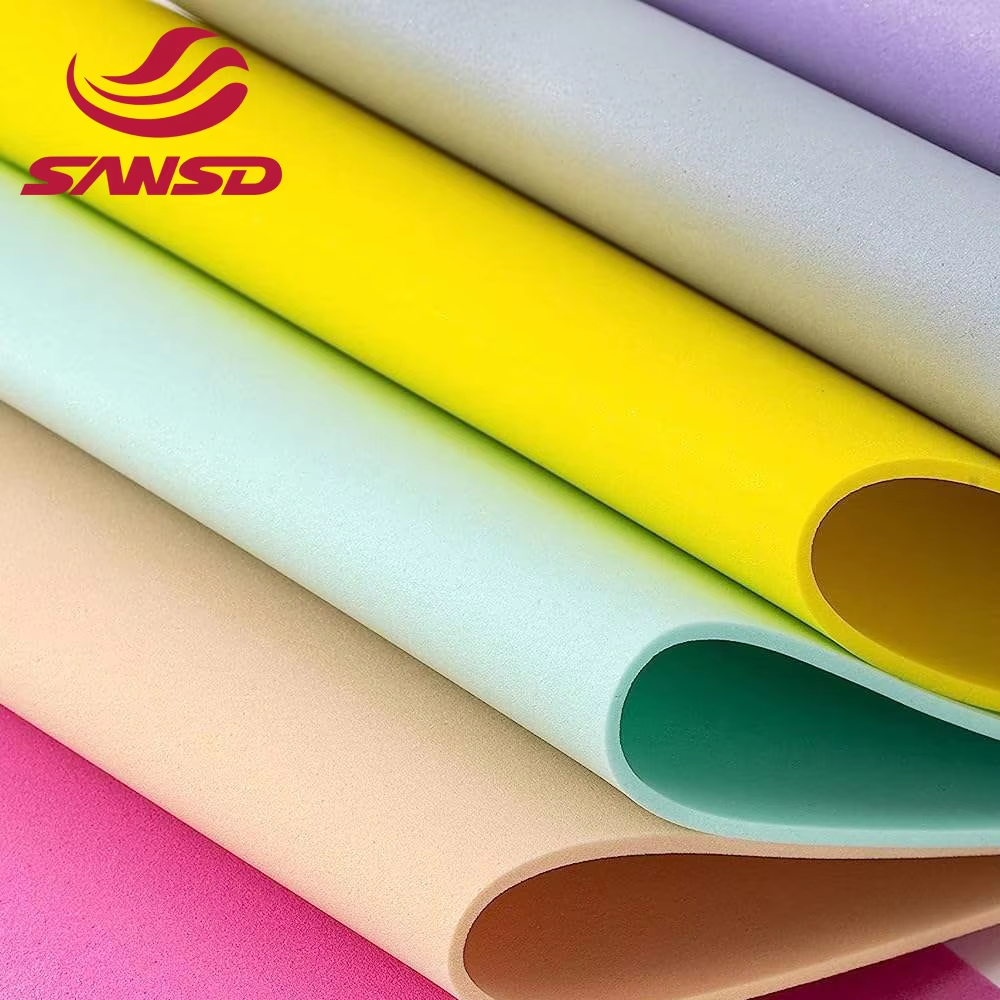
Sustainable Cushioning: Why Eco-Friendly TPE Foam Is Reshaping Industrial Material Choices
Manufacturing sectors face mounting pressure to decarbonize supply chains. Polymer-based cushioning materials — essential across packaging, footwear, automotive, and construction — have historically contributed to plastic waste streams because crosslinked foams cannot be remelted or reprocessed. Eco-friendly TPE foam (thermoplastic elastomer) addresses this structural limitation: unlike thermoset foams, TPE can be reheated, reshaped, and recycled without chemical degradation, closing the material loop that traditional foams leave open.
Understanding TPE Foam Chemistry and Environmental Advantages
How Thermoplastic Behavior Enables Full Recyclability
TPE foam belongs to a class of materials that combine rubber-like elasticity with thermoplastic processability. The polymer chains are physically crosslinked rather than chemically bonded — meaning heat reverses these crosslinks, returning the material to a melt-processable state. Post-industrial TPE foam scrap can be ground, pelletized, and re-extruded into new foam sheets with minimal property loss through up to five recycling cycles.
This contrasts sharply with conventional EVA and PU foams, where peroxide or isocyanate crosslinking creates irreversible chemical bonds. Crosslinked foam waste can be ground into filler but cannot return to its original performance state. For manufacturers targeting zero-waste certifications or circular economy compliance, TPE's inherent recyclability eliminates landfilling as the default end-of-life pathway.
Lifecycle analysis data indicates that recycled TPE foam carries a carbon footprint roughly 60–70% lower than virgin TPE production, primarily from eliminating the energy-intensive polymerization step. For a mid-sized factory processing 500 tons of foam annually, switching from virgin to 30% recycled-content TPE reduces CO₂ equivalent emissions by approximately 180–220 metric tons per year — comparable to removing 40–50 passenger vehicles from roads.
Non-Toxic Formulation and VOC Compliance
Eco-friendly TPE foam avoids phthalate plasticizers, chlorinated compounds, and heavy-metal catalysts common in some conventional foam formulations. This matters particularly for children's products, medical devices, and food-contact packaging, where chemical migration limits are stringent. TPE foam can achieve compliance with EU REACH, RoHS, and California Proposition 65 without requiring post-production treatment or barrier coatings.
Real-World Manufacturing Transition
Footwear Brand Cuts Scrap-to-Landfill by 82% with TPE Midsole Foam
A European sportswear brand producing 2 million pairs of running shoes annually sought to reduce manufacturing waste sent to landfill. Their existing EVA midsole foam generated 14% trim scrap during die-cutting — roughly 28 tons annually — which could only be downcycled into low-value filler granules. After reformulating with an eco-friendly TPE foam midsole compound from Sansd (Jiangsu) Environmental Technology, post-industrial scrap was reground and blended back into production at 25% recycled content. The brand achieved an 82% reduction in foam scrap sent to landfill within 12 months, meeting a key sustainability milestone ahead of their 2027 target.
Selecting and Specifying Eco-Friendly TPE Foam
Key Performance Metrics: Compression Set, Rebound, and Density
TPE foam covers a density range from 80 kg/m³ to 250 kg/m³, narrower than EVA but sufficient for most cushioning and sealing applications. Compression set — measuring permanent deformation after prolonged loading — typically ranges from 5–15% for TPE formulations, competitive with crosslinked EVA. Resilience (rebound) falls between 35–55%, providing adequate energy return for footwear and seating applications.
The primary trade-off buyers should understand is temperature resistance: standard TPE foam softens above 70°C, whereas EVA maintains mechanical properties to roughly 90°C. For automotive engine-bay applications or industrial equipment near heat sources, high-temperature TPE grades or EVA alternatives may be necessary.
Supply Chain and Cost Considerations
TPE foam carries a raw material premium of approximately 15–25% over conventional EVA foam of equivalent density. However, the total cost of ownership calculation shifts when factoring in scrap recycling value, reduced waste disposal fees, and potential eligibility for green-manufacturing tax incentives. Buyers should request suppliers to provide recycled-content certification (such as GRS — Global Recycled Standard) and third-party lifecycle assessment data when evaluating TPE foam sourcing decisions.
Frequently Asked Questions
Can eco-friendly TPE foam match the durability of traditional EVA foam?
Yes — properly formulated TPE foam delivers comparable tensile strength (1.5–3.0 MPa) and tear resistance (4–8 N/mm) to mid-range EVA formulations. The key difference is temperature ceiling: TPE softens around 70°C vs. 90°C for EVA. For room-temperature applications, durability is equivalent. Sansd produces TPE foam grades matching industry-standard mechanical specifications.
How many times can TPE foam be recycled?
TPE foam maintains acceptable mechanical properties through approximately 5 recycling cycles. Beyond this, polymer chain scission gradually reduces tensile strength and elongation. Blending 20–30% recycled content with virgin TPE preserves performance while improving sustainability metrics.
Is eco-friendly TPE foam biodegradable?
No — TPE foam is recyclable but not biodegradable. It will not decompose in landfill or marine environments. Its sustainability advantage comes from multiple recycling cycles, not biodegradation. Buyers seeking biodegradation should explore PLA-based foams, which carry different mechanical trade-offs.
What certifications should buyers request for eco-friendly TPE foam?
Request GRS (Global Recycled Standard) for recycled content verification, OEKO-TEX Standard 100 for chemical safety in consumer products, and REACH compliance documentation for EU market access. ISO 14001 certification of the manufacturing facility further validates environmental management systems.
Does TPE foam off-gas VOCs?
Low-VOC TPE formulations emit minimal volatile organic compounds because TPE does not require chemical crosslinking agents. Standard TPE foam meets indoor air quality guidelines such as GREENGUARD Gold. For medical and food-contact applications, specify pharmaceutical-grade TPE formulations with full migration-testing documentation.
Can TPE foam be used outdoors?
TPE foam resists UV degradation better than natural rubber but less effectively than EVA with UV stabilizers. For outdoor applications exceeding 2 years of sun exposure, request UV-stabilized TPE grades or consider EVA with UV additive packages. Marine and playground TPE foam should include anti-fungal additives for humid environments.