 EN
EN

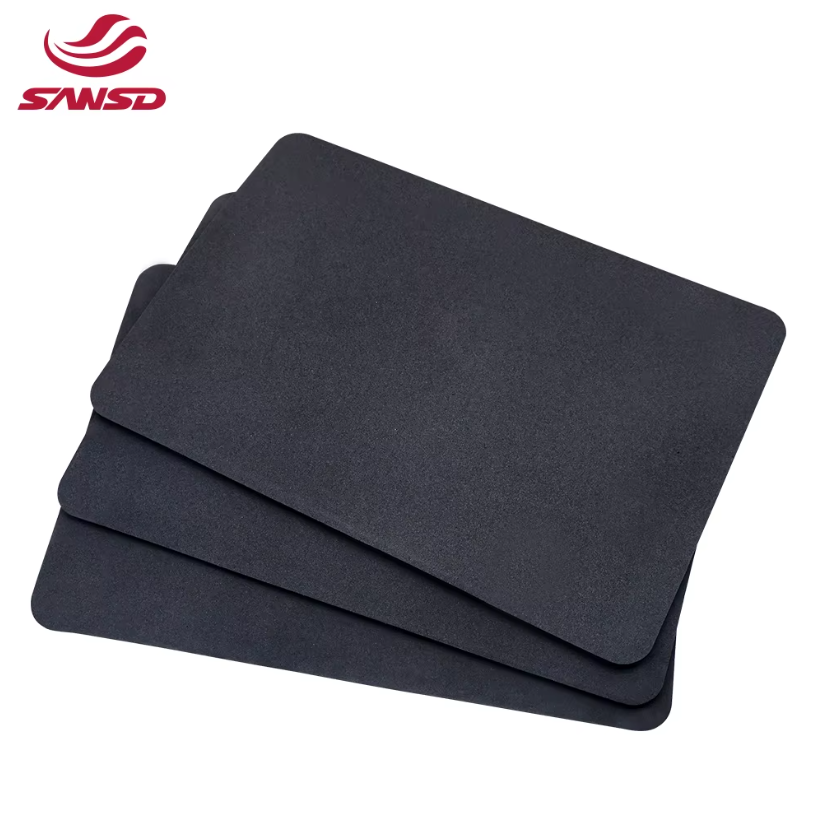
Why Neoprene Rubber Foam Excels in Harsh Environments
Closed-Cell Structure and Elastomeric Resilience Enable Superior Water, Oil, and Ozone Resistance
Neoprene rubber foam delivers exceptional performance in demanding environments thanks to its closed-cell structure—each cell is fully sealed, limiting water absorption to under 5% and effectively blocking moisture ingress that compromises open-cell alternatives. This architecture also provides inherent resistance to oils and greases, making it a trusted choice for gaskets in machinery with moderate hydrocarbon exposure. Its elastomeric backbone grants natural resistance to ozone, UV radiation, and oxidative aging—preventing surface cracking or embrittlement even under prolonged sunlight. With a durometer of 20–25 Shore C, it strikes an optimal balance of firmness and flexibility, maintaining resilience through repeated compression cycles without permanent set. These combined traits support reliable operation across a broad temperature range of –40°F to +200°F (–40°C to +93°C), validating its use in marine, automotive, and industrial applications where environmental stress is constant.
Real-World Validation: Marine Buoyancy Modules and Offshore Seals Retaining >98% Performance After 5 Years
Field evidence from offshore installations underscores neoprene rubber foam’s long-term reliability. Marine buoyancy modules built with closed-cell neoprene retained over 98% of original buoyancy and structural integrity after five years of continuous exposure to seawater, UV radiation, and mechanical wave impact. Likewise, subsea sealing systems demonstrated negligible compression set and no oil-induced swelling over the same period. These outcomes align with accelerated aging tests showing less than 5% water absorption and minimal durometer drift—confirming that neoprene’s elastomeric memory preserves functional geometry under sustained load or immersion. Engineers specify it for mission-critical roles precisely because this proven track record translates into predictable service life and reduced maintenance risk—giving procurement teams confidence in its performance where failure is not an option.
Neoprene Rubber Foam vs. EPDM and Silicone: Balancing Thermal Stability, Chemical Resistance, and Cost
Temperature Limits and Chemical Compatibility: Where Neoprene Outperforms EPDM (Oil) and Underperforms Silicone (Heat)
Material selection demands clarity on thermal and chemical boundaries. Neoprene rubber foam performs reliably from –40°C to 120°C and offers good resistance to oils, ozone, and moderate chemicals. EPDM extends further thermally (up to 150°C) and excels against weathering, UV, and steam—but it swells rapidly and degrades upon contact with oils, disqualifying it for many hydraulic or lubricated-system applications. Silicone rubber foam dominates at high temperatures, handling continuous service from –60°C to 230°C (and up to 300°C in specialty grades), while also delivering outstanding solvent and UV resistance. The comparative profile is summarized below:
| Material | Typical Temperature Range | Oil Resistance | Weathering / UV Resistance | Cost Level |
|---|---|---|---|---|
| Neoprene Rubber Foam | –40°C to 120°C | Good | Good | Moderate |
| EPDM | –40°C to 150°C | Poor | Excellent | Low–Moderate |
| Silicone Rubber Foam | –60°C to 230°C | Good | Excellent | High |
For applications involving moderate heat and incidental oil or grease exposure—such as hydraulic system gaskets or outdoor equipment enclosures—neoprene delivers the most cost-effective balance of performance and value. EPDM remains ideal for purely weather-exposed roles, while silicone is indispensable where sustained temperatures exceed 120°C.
Emerging Hybrid Solutions: Neoprene‑Silicone Blends for Multi‑Threat HVAC and Industrial Gasketing
No single elastomer solves every challenge—so material innovation is bridging critical gaps. Neoprene-silicone blended foams now combine neoprene’s oil resistance and abrasion durability with silicone’s thermal stability. These hybrids typically retain flexibility from –40°C to 180°C, filling the operational void between standard neoprene and full silicone. In HVAC systems exposed to hot exhaust air and occasional oil mist—or industrial gasketing subject to thermal cycling and chemical splash—they eliminate the need for layered, multi-material solutions. Early field data from pilot installations shows a 15–20% reduction in seal replacement frequency compared to standard neoprene in mixed-exposure environments—achieving improved longevity without the full cost premium of pure silicone. As formulation precision improves, these engineered blends are becoming viable, specification-ready options for engineers who must meet dual-threat requirements without compromise.
Neoprene Rubber Foam vs. TPE and Nitrile: Trade-offs in Flexibility, Durability, and Sustainability
UV, Marine, and Long-Term Compression Set: Why TPE Falls Short Despite Recyclability
Thermoplastic elastomers (TPE) offer clear sustainability advantages—especially recyclability—which appeals to environmentally driven design goals. However, their performance limitations become apparent in harsh settings. TPEs degrade significantly under extended UV exposure, restricting suitability for long-term outdoor use. Saltwater and marine conditions accelerate surface oxidation and loss of mechanical cohesion. Most critically, TPE exhibits higher long-term compression set than neoprene rubber foam, meaning seals progressively lose recovery force and dimensional stability under sustained pressure. While acceptable for short-life consumer products, these shortcomings undermine reliability in marine hardware, industrial enclosures, or infrastructure components where decades-long service life and consistent sealing force are non-negotiable.
Vibration Damping and Elongation Requirements: When Neoprene Rubber Foam Is Preferred Over Nitrile
Nitrile butadiene rubber (NBR) is unmatched for oil resistance—but its weaknesses limit broader applicability. It lacks meaningful ozone and UV resistance, rendering it unsuitable for unshielded outdoor use. More importantly, nitrile offers inferior vibration damping: it transmits more shock and noise than neoprene foam, which is engineered to absorb energy in dynamic mounts and machinery interfaces. Neoprene also delivers higher elongation at break—typically 300–800% versus nitrile’s 150–300%—providing greater tolerance for movement, expansion, and misalignment in dynamic seals. For gaskets on vibrating compressors, engine mounts, or equipment subjected to thermal cycling and environmental exposure, neoprene’s combination of damping, flexibility, and broad-spectrum resistance makes it the preferred solution—even when oil resistance alone might suggest nitrile.
Selecting Neoprene Rubber Foam: A Decision Framework for Engineers and Procurement Teams
Choosing the right neoprene rubber foam requires aligning material capabilities with real-world application demands. Begin by mapping primary environmental threats: water immersion, ozone, UV, oils, or salt spray. Neoprene excels where any combination of these dominate—maintaining structural integrity where alternatives degrade. Next, verify thermal requirements: standard formulations cover –40°F to 212°F (–40°C to 100°C); specialty grades extend to +200°F (+93°C) or beyond. Assess mechanical needs—compression set resistance below 25% ensures durable sealing in static gaskets, while high elongation (300–800%) supports dynamic applications like vibration isolators. For marine or heavy-industrial use, prioritize closed-cell neoprene validated by field performance—not just lab data. Cross-reference these criteria with expected service life and maintenance tolerances to avoid costly mismatches. Finally, always prototype under simulated operating conditions—including thermal cycling, fluid exposure, and compression loading—to confirm functional fit before scaling deployment.
FAQ
What makes neoprene rubber foam suitable for harsh environments?
Neoprene rubber foam has a closed-cell structure that limits water absorption, provides resistance to oils, ozone, and UV radiation, and maintains its elasticity under extreme conditions. This makes it highly durable and reliable in demanding applications.
How does neoprene compare to EPDM and silicone in terms of performance?
Neoprene offers a good balance of thermal resistance, oil resistance, and cost-effectiveness. Compared to EPDM, neoprene handles oils better but has a lower temperature range. Silicone surpasses neoprene in temperature tolerance and UV resistance but comes at a higher cost.
Can neoprene rubber foam be used in marine applications?
Yes, neoprene rubber foam is widely used in marine environments due to its buoyancy retention, resistance to seawater, and durability under UV exposure.
What are neoprene-silicone blends, and where are they used?
Neoprene-silicone blends combine the best characteristics of both materials: neoprene’s oil resistance and silicone’s thermal stability. They are commonly used in HVAC systems and industrial gasketing requiring dual-threat resistance.
How does neoprene perform compared to TPE and nitrile?
Neoprene outperforms TPE in UV and marine applications, as TPE is prone to degradation under such conditions. While nitrile excels in oil resistance, neoprene is better for vibration damping, elongation, and dynamic applications.
Table of Contents
- Why Neoprene Rubber Foam Excels in Harsh Environments
- Neoprene Rubber Foam vs. EPDM and Silicone: Balancing Thermal Stability, Chemical Resistance, and Cost
- Neoprene Rubber Foam vs. TPE and Nitrile: Trade-offs in Flexibility, Durability, and Sustainability
- Selecting Neoprene Rubber Foam: A Decision Framework for Engineers and Procurement Teams
-
FAQ
- What makes neoprene rubber foam suitable for harsh environments?
- How does neoprene compare to EPDM and silicone in terms of performance?
- Can neoprene rubber foam be used in marine applications?
- What are neoprene-silicone blends, and where are they used?
- How does neoprene perform compared to TPE and nitrile?