 EN
EN
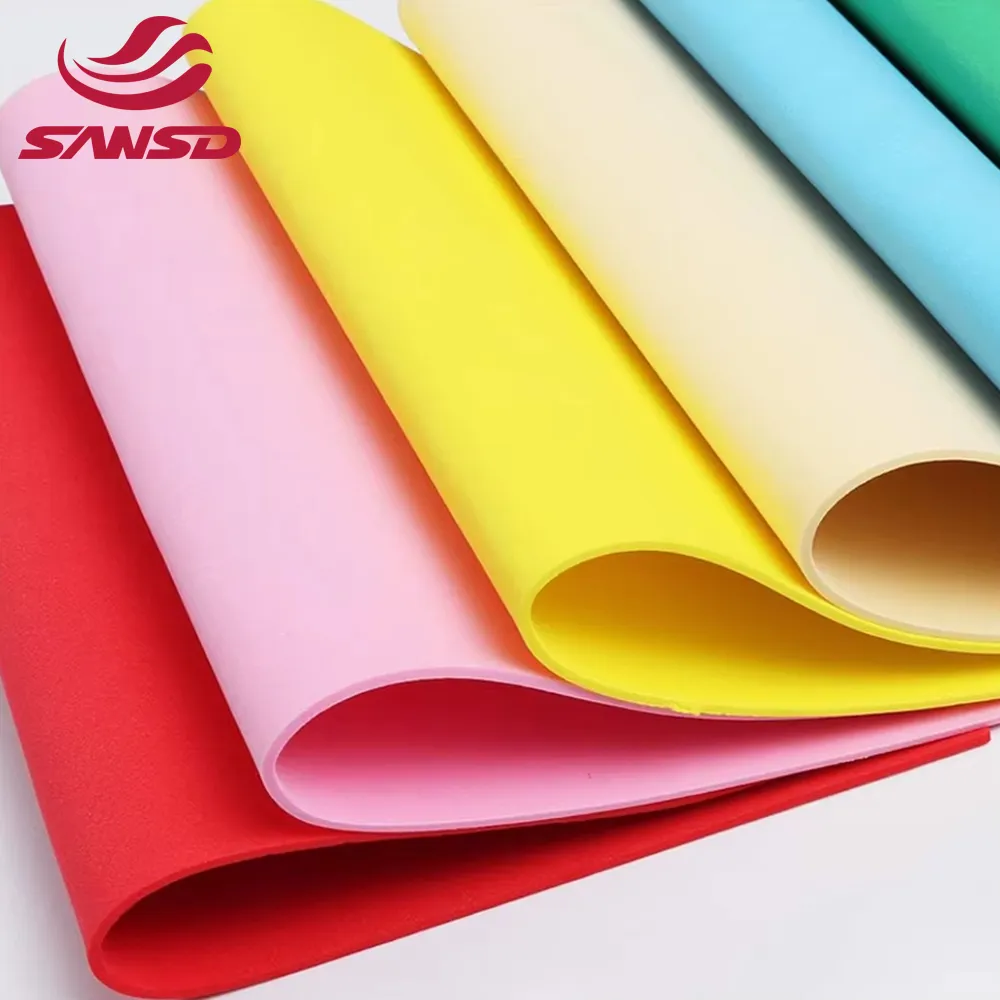
A product development manager at a European fitness equipment brand faced a compressed timeline: six months to bring a new exercise mat line from concept to container. The design team had finalized specifications — 15 millimeters thick, 80 kilograms per cubic meter density, textured surface, custom color matching — but lacked any in-house foaming or fabrication capability. Three weeks into supplier evaluation, one manufacturer stood out: in-house color masterbatch production, CNC and die-cutting under one roof, ISO 9001 and GRS certifications, plus manufacturing facilities in China and Vietnam offering tariff flexibility. The mats launched on schedule, and the partnership has since expanded to four additional product lines. Finding the right OEM partner determines whether an eva foam project reaches market on time or stalls in supply chain friction.
Core Capabilities That Separate OEM Partners
Vertical Integration as a Quality Predictor
When a single facility controls raw material compounding, foaming, fabrication, and finishing of eva foam, quality variability drops compared to multi-vendor supply chains where each handoff introduces specification drift. Raw material compounding determines the product's DNA — EVA or PE resin, blowing agents, crosslinking agents, fillers, and colorants must be precisely formulated. The foaming stage converts compounds into bulk material with controlled density, cell structure, and hardness. Fabrication transforms bulk foam through cutting, shaping, and assembly. Each stage influences the next — a deviation in compounding affects foaming behavior, and density variation changes how cutting tools perform. A facility managing all stages internally can diagnose and correct issues faster than one coordinating across multiple external vendors.
Fabrication Breadth and Project Feasibility
CNC routing and milling enable complex three-dimensional eva foam parts — shoe midsoles, orthotic inserts, equipment padding with graduated thickness profiles. Die-cutting efficiently processes sheet material into gaskets, seals, and spacers. Water-jet cutting handles heat-sensitive materials. Laminating bonds foam with fabric, film, or adhesive layers. Tape slitting converts roll stock into narrow-width rolls for automated assembly. A manufacturer offering this full range can recommend the optimal fabrication method for a given design rather than steering projects toward whatever equipment is available.
Formulation Development and Quality Assurance
How Custom Formulations Are Built
Color masterbatch manufacturing capability separates sophisticated OEM partners from basic foam suppliers. In-house masterbatch production using self-developed carrier resin systems enables precise color matching, shorter lead times, and batch-to-batch consistency difficult to achieve with third-party suppliers. ### Compliance Documentation Before Production Begins
laboratory-scale trial batches, sample panel production for physical property testing against target specifications, iteration based on test results, scale-up to production trials, and consistency validation across full batches. For eva foam products destined for European and North American markets, REACH chemical safety compliance, RoHS restrictions, and California Proposition 65 requirements apply regardless of manufacturing location. A responsible OEM partner for eva foam provides compliance documentation before production begins, not after a shipment gets held at customs.
Strategic Partnership Factors
Multi-Region Manufacturing and Supply Chain Resilience
OEM partners with production facilities in multiple countries — China plus Vietnam or Indonesia — offer more than cost advantages. Shifting volumes between locations in response to tariff changes, shipping disruptions, or demand fluctuations provides resilience that single-location suppliers cannot match. Minimum order quantities vary — some manufacturers focus on large brands, while others support emerging brands with MOQs as low as 200 pieces per color. The sample development process for eva foam products previews the production relationship: a manufacturer that translates designs into physical samples efficiently, with clear communication at each stage, demonstrates the engineering depth that will characterize production at scale. Factory audit capability, including virtual options and third-party inspection report availability, should be confirmed before committing to volumes.
Frequently Asked Questions
What is the typical timeline from concept to first production run?
The full development cycle spans eight to sixteen weeks, including formulation development, sample production, property testing, design iteration, tooling fabrication, trial production, and quality validation. Rushing any stage increases the risk of production quality issues.
How are minimum order quantities determined for custom eva foam products?
MOQs depend on product category, fabrication method, and color variants. Die-cut sheet products often start at 500 to 1,000 pieces, while CNC-machined brick components may start lower. Some manufacturers offer MOQs as low as 200 pieces per color for select categories.
Can OEM manufacturers work from CAD files and reference samples?
Most established OEM partners accept both digital design files and physical reference samples. Providing both — CAD specifications plus a sample demonstrating desired feel, density, and surface finish — gives the manufacturer the clearest target for formulation and fabrication.
What quality documentation should buyers expect before shipment?
Pre-shipment documentation should include density and hardness test results, dimensional inspection reports, photos of finished products with measurement overlays, and compliance certificates for REACH, RoHS, or other standards relevant to the destination market.
How do multi-country manufacturing facilities benefit buyers?
Multiple-country facilities allow production routing through locations with preferential trade agreement access, potentially reducing customs duties. They also provide resilience against regional disruptions, tariff changes, or shipping interruptions affecting a single location.
When should buyers consider switching OEM partners?
Declining batch consistency, unexplained lead time increases, unresolved quality issues after two production cycles, or failure to provide compliance documentation are signals that the current OEM partnership may need reevaluation against alternatives.