 EN
EN

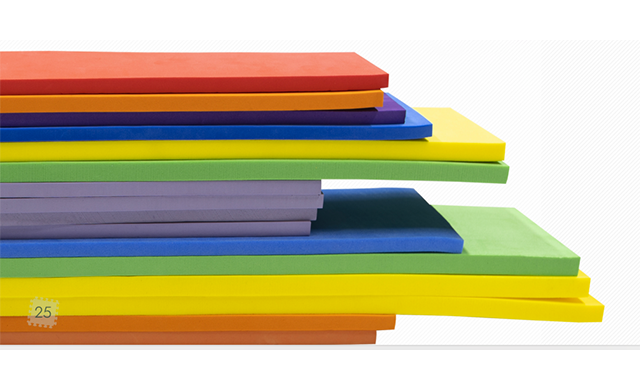
What Is Silicone Foam Sheet and Why It Stands Out
Silicone foam sheet is a resilient, closed-cell material made from liquid silicone rubber (LSR) and formed through controlled expansion during curing. This process yields a uniform cellular structure with densities typically between 12–28 lbs/ft³ (200–450 kg/m³), striking an optimal balance of compressibility, recovery, and durability. Unlike conventional rubber gaskets, it delivers exceptional temperature resistance (–60°C to +200°C), low compression set (<25% deformation after prolonged stress), and inherent flame retardancy—meeting UL 94 V-0 standards. Its closed-cell architecture provides reliable sealing against moisture, dust, and gases while retaining electrical insulation properties—making it critical for EV battery enclosures and medical device housings. The material’s flexibility enables consistent conformability to irregular surfaces, sustaining seal integrity under thermal cycling and vibration. Leading EV manufacturers rely on it for battery pack thermal barriers and edge seals, where long-term compression force retention over 10+ years—without significant creep—is essential. FDA 21 CFR 177.2600 compliance supports food-safe use, and UV stability ensures performance in outdoor applications. These attributes collectively position silicone foam sheet as a high-performance alternative to solid rubber, EPDM, and polyurethane foams across sealing, cushioning, and insulation applications.
Key Physical and Chemical Properties of Silicone Foam Sheet
Temperature Resistance and Compression Set Performance
Silicone foam sheet maintains structural integrity from –60°C to +200°C, enabling reliable function in cryogenic storage, under-hood automotive environments, and high-heat industrial equipment. Its low compression set—validated per ASTM D395—ensures >75% shape recovery after extended compression, a vital trait for gaskets and dynamic seals subject to thermal cycling or mechanical load. While open-cell variants offer quicker rebound, closed-cell formulations deliver superior long-term dimensional stability under continuous pressure.
Sealing Efficiency, Electrical Insulation, and Flame Retardancy
The closed-cell structure creates an effective barrier against water, air, and particulate ingress, supporting robust sealing in demanding enclosures. With dielectric strength exceeding 500 V/mil, it provides dependable electrical insulation in power electronics and battery systems. Crucially, silicone foam sheet is inherently flame-retardant and self-extinguishing—achieving UL 94 V-0 without halogenated additives—enhancing safety in aerospace, rail, and energy storage systems without compromising flexibility or service life.
Top Industrial Applications of Silicone Foam Sheet
Silicone foam sheet’s unique combination of compressibility, thermal stability, and chemical resistance drives its adoption across demanding industries. Two key areas illustrate its versatility.
Automotive Gasketing and EV Battery Thermal Management
In automotive assemblies, silicone foam sheet serves as a durable gasketing solution for engine compartments and lighting systems—withstanding under-hood temperatures up to 200°C while resisting ozone, oils, and moisture. For electric vehicles, its ability to maintain compression force at elevated temperatures (up to 230°C short-term) makes it ideal for cell-to-cooling-plate interfaces, helping mitigate thermal runaway propagation and dampen vibration-induced fatigue in battery modules.
Electronics Encapsulation and Medical Device Sealing
Silicone foam sheet functions as a protective, shock-absorbing layer in consumer and industrial electronics—shielding circuit boards from impact, dust, and EMI-related interference. In medical devices, its biocompatibility (per ISO 10993), non-reactivity, and resistance to repeated sterilization (including autoclave, gamma, and EtO) support critical sealing applications in ventilators, diagnostic imaging systems, and wearable monitors—where leak-tight integrity and patient safety are non-negotiable.
How to Select the Right Silicone Foam Sheet for Your Project
Matching Density, Thickness, and Durometer to Functional Needs
Selecting the ideal silicone foam sheet requires aligning three interdependent physical properties with your application’s functional and environmental demands. Density—typically 200–800 kg/m³ (12–50 lbs/ft³)—directly influences weight, compression resistance, and thermal performance: higher-density sheets suit static, load-bearing seals; lower densities excel in conformability for uneven substrates. Thickness (0.5–15 mm) determines gap-filling capacity and space constraints—thicker sheets accommodate larger tolerances but may limit design flexibility. Durometer (Shore A 10–50) reflects softness and damping behavior: softer grades enhance vibration isolation and surface conformity, while firmer options preserve geometry in high-pressure static gaskets. Prioritize these parameters based on exposure to temperature extremes, chemical agents, dynamic movement, and required service life.
| Property | Typical Range | Application Impact |
|---|---|---|
| Density | 200–800 kg/m³ | Weight, compression set, thermal insulation |
| Thickness | 0.5mm–15mm | Gap sealing, compressibility, space constraints |
| Durometer | Shore A 10–50 | Conformability, pressure distribution, vibration damping |
Certifications, Custom Fabrication, and Supplier Evaluation Tips
Beyond physical specs, verify application-critical certifications: UL 94 V-0 for flame safety in electronics and transportation; ISO 10993 biocompatibility for medical use; and FDA 21 CFR 177.2600 for food-contact applications. When standard sheet sizes or geometries fall short, confirm supplier capabilities for precision die-cutting, multi-layer lamination, or pressure-sensitive adhesive (PSA) backing. Evaluate potential partners on material traceability, batch-to-batch consistency (supported by compression set and thermal aging reports), and responsive prototyping support. Prioritize manufacturers with ISO 9001-certified quality management systems—and request documentation for ASTM D395 compression testing and long-term thermal aging per ASTM D573—to substantiate performance claims and ensure supply chain reliability.
FAQs About Silicone Foam Sheet
What is a silicone foam sheet?
Silicone foam sheet is a closed-cell material made from liquid silicone rubber (LSR) offering compressibility, durability, and exceptional performance in sealing, insulation, and cushioning applications.
What industries use silicone foam sheets?
Industries like automotive, medical devices, electronics, aerospace, and energy storage use silicone foam sheets for gasketing, thermal management, electrical insulation, and sealing.
Is silicone foam sheet flame-retardant?
Yes, silicone foam sheet is inherently flame-retardant and self-extinguishing, meeting UL 94 V-0 standards without halogenated additives.
How to select a silicone foam sheet for my project?
Consider factors such as density, thickness, durometer, temperature resistance, and relevant certifications based on your project’s application and environmental demands.
Can silicone foam sheet be customized?
Yes, many suppliers provide custom fabrication, including die-cutting, lamination, and adhesive backing, to meet specific project requirements.