 EN
EN

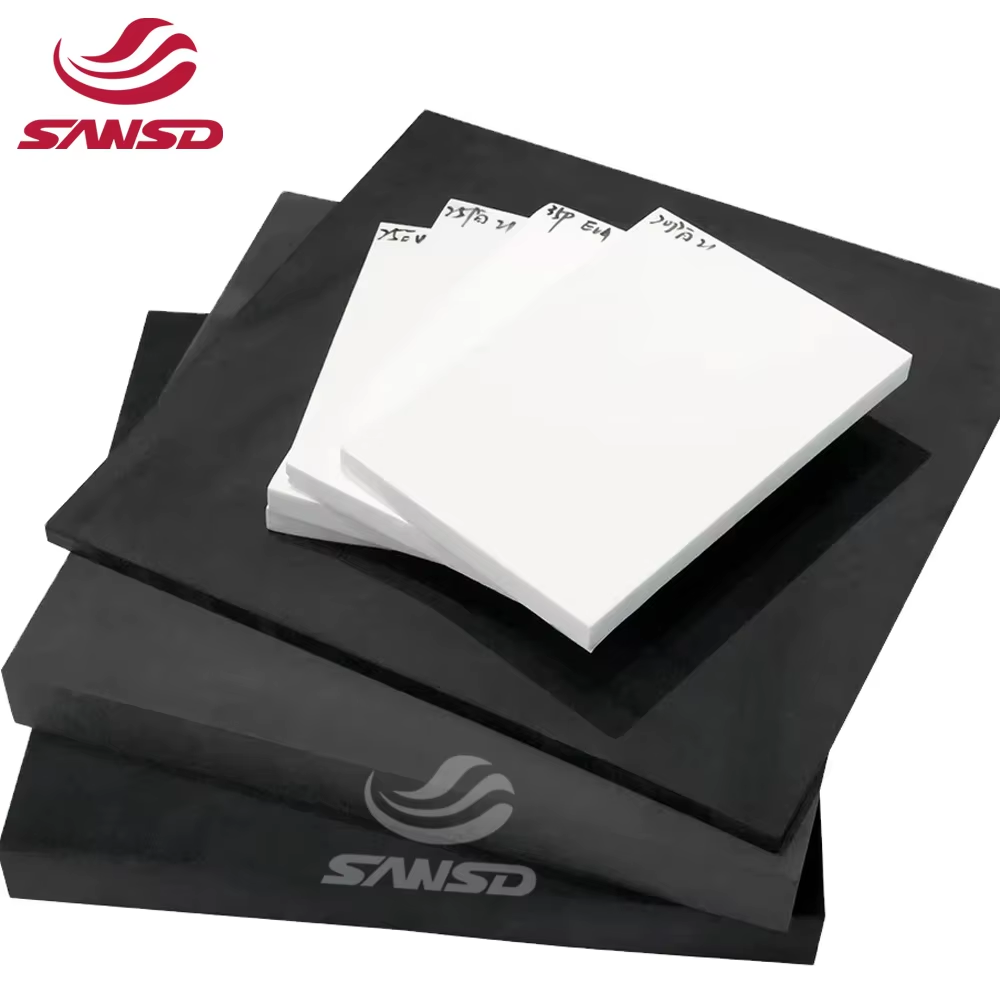
A Drop Test That Changed a Product Line
A helmet maker released a children's skate helmet that passed every internal bench check, then failed an independent laboratory drop by a wide margin. The liner was shock absorbing eva foam at the density stated on the drawing, but the grade chosen had a hard, springy rebound instead of a controlled crash. Changing to a softer grade with better set resistance brought peak deceleration under the limit without adding a single gram of weight.
The liner that failed the lab drop
The internal check had been a simple drop from waist height onto a hard floor with no instrumentation, which told the team the shell did not crack and nothing else. The accredited lab used a guided headform, a defined impact velocity, and a load cell reading deceleration in g. Under that setup, shock absorbing eva foam rated as "firm" bottomed out and transmitted a sharp spike. The pass had been an illusion created by a test that measured the wrong thing.
The shell was never the problem. Energy that reaches the head is energy the liner failed to spend, and no amount of shell stiffness changes that arithmetic. Shock absorbing eva foam has to deform to do its job, and the grade that felt firmest in the hand turned out to transmit the most force. That is why shock absorbing eva foam belongs on instrumented test data rather than a squeeze in the workshop.
What the redesigned pad changed
The fix was not thicker foam. The team selected a grade with a lower compression deflection so the cells collapsed progressively instead of resisting and then failing all at once. Shock absorbing eva foam that yields in a controlled way spreads the same energy over a longer stopping distance, and that is what lowers the peak force reaching the head. Weight and shell geometry stayed exactly the same, which kept the tooling budget intact.
Injury and Liability When Padding Falls Short
Impact energy and stopping distance
Impact energy has to go somewhere, and the body absorbs whatever the padding does not. Bringing a moving object to rest over a longer distance lowers the peak force, which is why thicker or softer padding often outperforms thin, hard material. Shock absorbing eva foam manages that trade by deforming rather than bouncing. A pad that rebounds sharply returns energy to the wearer at exactly the moment the body least wants it.
Everyday products show the same principle. A running shoe heel, a knee pad and a phone case all manage identical physics with different thicknesses, and the ones that work convert motion into deformation gradually. Shock absorbing eva foam gives designers a wide range to work with, since density and thickness can be tuned independently of each other. Matching the grade to the expected impact speed is what matters, because shock absorbing eva foam behaves differently at walking pace than it does during a fall.
Padding that ages out quietly
Padding also ages out without obvious warning. Repeated light impacts, heat, and body oils compress the cell structure over months, so a liner that passed on day one can transmit far more force a year later. Shock absorbing eva foam with a high compression set figure loses thickness and protection silently. Products intended for repeated use need a defined service life and a replace-by date, not a lifetime claim that nobody tests.
Energy Absorption in Cellular Materials
Strain rate and controlled collapse
Cellular materials behave differently depending on how fast they are loaded. At a slow press, air moves gently between cells and the response is soft; at impact speed, the same shock absorbing eva foam feels much firmer because the gas has no time to escape. That strain-rate sensitivity is a feature when it is understood, because a well-chosen grade stiffens under a hard hit while staying comfortable during ordinary wear.
Thickness versus density
Thickness and density are the two dials, and they are not interchangeable. Adding thickness increases stopping distance, which is the most direct way to lower peak force. Raising density increases the force needed to compress each millimetre, so a thin dense pad can feel protective while actually transmitting more shock. Shock absorbing eva foam works best when density is chosen to hold shape and thickness is chosen to do the energy management.
Cost follows density, so the temptation is to buy a dense thin pad and call it protective. That usually fails on the drop rig. Shock absorbing eva foam at a moderate density with enough thickness normally outperforms a dense thin section for the same money, and it weighs less too. Designers who test both find that shock absorbing eva foam rewards thickness over hardness in almost every single-impact application.
Test Methods and a Safer Specification
Impact testing that means something
ASTM D1596 measures the shock-absorbing characteristics of packaging cushioning by dropping a known mass from a set height and recording transmitted acceleration, which is the cleanest way to compare grades. ASTM D3575 covers the material properties behind that behaviour, including density and compression set. Headgear faces ASTM F1446 and, in the US, 16 CFR 1203, with EN 1078 used across much of Europe. Each method sets impact velocity, anvil shape, and pass limits.
Writing a padding specification that holds
A useful specification names more than a density. It states thickness with a tolerance, compression deflection at a defined strain, compression set after a defined hold, and the impact test with its limit. Requiring a per-lot certificate and a retained sample lets a maker prove the shock absorbing eva foam in a returned product matched what was approved. Suppliers such as SANSD supply grade data against these test methods, which turns a safety claim into a documented, repeatable one.
Frequently Asked Questions
Question: Does thicker foam always protect better?
Answer: Up to a point, yes. Extra thickness lengthens the stopping distance, which directly lowers peak force, but too much bulk can make a product unwearable or unstable. Shock absorbing eva foam works best when thickness handles energy management and density is set just high enough to keep the pad from bottoming out completely.
Question: Why does foam feel firm at high speed?
Answer: Cell gas cannot escape fast enough during a rapid impact, so the material stiffens. That strain-rate effect is normal and useful, since shock absorbing eva foam can stay comfortable in ordinary use yet resist hard hits. Grades behave differently, which is why a single-handed squeeze tells very little about real impact performance.
Question: How long does protective padding last?
Answer: It depends on use, heat and compression set. A liner in daily service slowly loses thickness and transmits more force without looking damaged. Makers should state a service life and a replace-by date, and users should treat any pad that has taken a heavy impact or shows permanent flattening as finished.
Question: Is density the best measure of protection?
Answer: No. Density only says how much material sits in a given volume. Compression deflection and impact transmission say far more about protection. Shock absorbing eva foam at a high density can actually transmit more shock than a lower-density grade that is thicker, because the stopping distance is shorter.
Question: Which standards apply to protective padding?
Answer: Packaging cushioning uses ASTM D1596, while material properties fall under ASTM D3575. Headgear in the US is governed by 16 CFR 1203 and ASTM F1446, with EN 1078 common in Europe. Toys and children's products also face CPSIA and EN 71 limits on substances. The right test depends on the product.
Question: Can a failed drop test be fixed without new tooling?
Answer: Often yes. Changing grade, thickness, or cell structure usually changes impact transmission more than shell geometry does. The helmet maker in this case passed only by selecting a shock absorbing eva foam grade with a lower compression deflection, keeping the same tooling, weight, and shape throughout the redesign.