 EN
EN

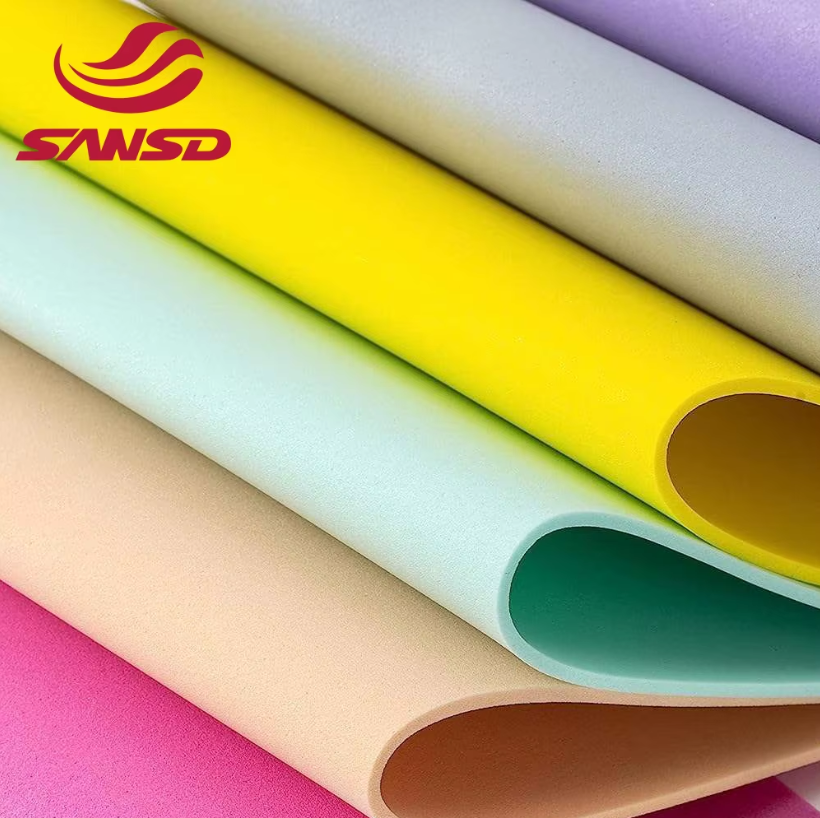
Lightweight Foam ROI Fundamentals: Cost, Protection, and Logistics Efficiency
The Cost–Weight–Protection Triad: How Lightweight Foam Reduces Total Landed Cost
Achieving packaging ROI hinges on optimizing the interplay between material cost, weight efficiency, and protective performance. Lightweight foam excels across all three—directly lowering total landed cost, the comprehensive expense covering materials, production, shipping, and damage-related losses. By reducing package weight by up to 40% versus traditional alternatives, it cuts freight expenses while maintaining superior cushioning. Since freight typically accounts for 60–70% of total packaging costs—and carriers charge based on dimensional weight (DIM)—even modest weight reductions yield immediate savings. Crucially, foam’s engineered resilience also minimizes in-transit damage, a hidden cost driver that erodes margins through replacements, returns, and reputational harm. This dual impact—lower shipping fees and reduced shrinkage—creates compounding ROI.
Freight Savings in Action: 22% Average Reduction in E-Commerce Fulfillment Logistics Spend
The weight advantage of lightweight foam delivers rapid, scalable logistics savings—especially in e-commerce, where shipping volume compounds quickly. Industry analysis shows brands adopting optimized foam solutions achieve an average 22% reduction in fulfillment logistics spend, driven primarily by lower parcel weight and improved trailer and carton utilization. Because foam maintains protective performance at lower densities, it enables smaller, lighter packaging without sacrificing integrity. For high-volume shippers, the math is compelling: a 5-gram reduction per package translates to over $740,000 in annual freight savings when shipping 10 million units. These economics make foam not just a packaging upgrade—but a strategic margin lever for logistics-intensive operations.
Lightweight Foam Implementation Speed: Accelerating Time-to-Value
From Design to Shelf in <6 Weeks: Modular Tooling and Digital Twin Validation
Lightweight foam dramatically compresses packaging development timelines through modular tooling and digital twin validation. Unlike custom molds requiring months of lead time, standardized, reconfigurable components enable rapid design iteration—cutting physical tooling cycles from weeks to days. Paired with digital twin simulation, teams validate compression behavior, vibration damping, and drop performance virtually—eliminating costly physical prototyping rounds. The result: development cycles shrink from 12+ weeks to under 6 weeks, accelerating time-to-market by more than 50%. One electronics manufacturer reduced packaging development from 14 weeks to 5 weeks while maintaining full ISTA 3A compliance. This agility also supports last-minute design changes—critical for seasonal or trend-driven launches needing fast shelf deployment.
Lightweight Foam and Regulatory ROI: Meeting 2026 EPR, Carbon Labeling, and Circularity Mandates
92% Recycled Content Feasibility Without Compromising Structural Performance
With Extended Producer Responsibility (EPR) regulations taking effect in March 2026, packaging must be clearly labeled for recyclability—and noncompliance carries financial penalties. Lightweight foam offers a distinct regulatory advantage: advanced formulations now support up to 92% post-consumer recycled (PCR) content while preserving cushioning efficacy and dimensional stability. This high recycled content aligns directly with the Recyclability Assessment Methodology (RAM) criteria, helping brands avoid EPR fees and uphold transit protection. For e-commerce, it means one material can simultaneously satisfy both compliance mandates and operational durability requirements—delivering ROI through avoided penalties and sustained product integrity.
Navigating Biodegradability Claims vs. Real-World Composting Infrastructure Limits
While some lightweight foams are marketed as “biodegradable,” real-world composting infrastructure remains highly limited. Few municipal facilities accept industrial compostable packaging, and home-composting conditions rarely meet certification timelines for effective degradation. Under 2026 EPR labeling rules—which require accurate, verifiable recyclability claims—overstating biodegradability poses tangible compliance risk. A more robust, pragmatic approach is to prioritize mechanically recyclable designs, such as mono-material lightweight foam. These are readily sorted and reprocessed in existing recycling streams, reduce consumer confusion, and support circularity goals without relying on underdeveloped infrastructure. This alignment with actual waste processing capacity strengthens both regulatory readiness and brand credibility.
Lightweight Foam Performance Benchmarking Against Traditional Alternatives
ISTA 3A Drop-Test Results: 97% Product Integrity at 30g vs. 68% for Molded Pulp
Standardized ISTA 3A drop testing reveals a decisive performance gap: lightweight foam maintained 97% product integrity at 30g impact, compared to just 68% for molded pulp. That 29-percentage-point difference reflects fewer damaged goods, lower return rates, and higher customer satisfaction—especially critical in e-commerce, where unboxing experience drives reviews and repeat purchases. Foam’s closed-cell structure delivers consistent shock absorption across variable drop heights, angles, and surface types—outperforming fiber-based alternatives that degrade predictably under repeated stress. For fulfillment centers, this translates into measurable cost avoidance: reduced replacement shipments, lower reverse logistics overhead, and stronger brand reputation. Based on these controlled results, switching from molded pulp to lightweight foam can cut damage-related losses by nearly one-third.
FAQ Section
1. What is the primary advantage of lightweight foam in packaging?
Lightweight foam reduces total landed costs by lowering material weight, cutting freight costs, and maintaining excellent protective performance.
2. How does lightweight foam minimize shipping expenses?
By reducing dimensional weight by up to 40%, lightweight foam lowers freight charges significantly, which typically make up 60–70% of packaging costs.
3. Is lightweight foam environmentally friendly?
Yes, advanced formulations of lightweight foam support up to 92% post-consumer recycled content, meeting regulatory standards for recyclability.
4. How quickly can lightweight foam-based packaging be developed?
Packaging development timelines can be reduced from 12+ weeks to under 6 weeks using modular tooling and digital twin validation techniques.
Table of Contents
- Lightweight Foam ROI Fundamentals: Cost, Protection, and Logistics Efficiency
- Lightweight Foam Implementation Speed: Accelerating Time-to-Value
- Lightweight Foam and Regulatory ROI: Meeting 2026 EPR, Carbon Labeling, and Circularity Mandates
- Lightweight Foam Performance Benchmarking Against Traditional Alternatives
- FAQ Section